

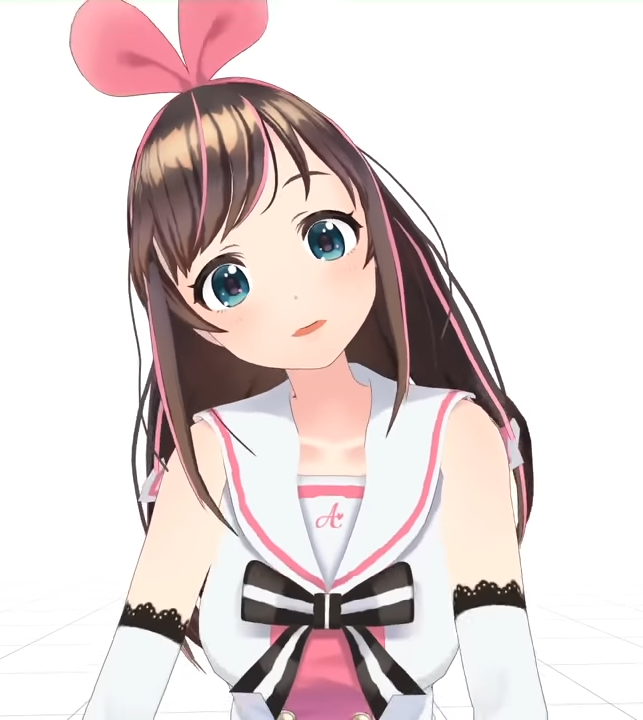
Attribution: © Kizuna AI, SCP Foundation.
The rise of VTubers and why your next best friend may very likely be a Virtual Character
As technology continues to advance, the mediums of entertainment have also followed suit. Influencers have integrated themselves into every facet of society, whether it is politics, entertainment, or even marketing. One interesting point to note is that 42% of Generation Z and Millennials who follow influencers don’t know those influencers are actually Computer-Generated Imagery (CGI). CGI and technology have given birth to a new wave of influencers called VTubers. VTubers are virtual YouTubers that use a virtual avatar generated by computer graphics. They often use real-time motion capture technology that records their facial expressions and projects them to the virtual avatar. This technology is crucial to their stream as high importance is placed on the ability to mimic facial expressions through proper animation of avatars.
Although Ami Yamato, the first ever VTuber, debuted on May 18, 2011, the COVID-19 pandemic helped accelerate its growth. People were not able to go outside and have fun because of the pandemic. As a result of people craving entertainment while staying at home, there has been a dramatic increase in video game live-streaming ever since. Throughout these years, VTubers gained colossal fame and profits. Companies that saw a chance to make money decided to invest in this concept. An example is the Nijisanji company owned by AnyColor Inc. located in Japan. Considered one of the largest companies of VTuber, their company has 160 employees in Nijisanji and 20 in Nijisanji EN, the English branch. Almost all of the top content creators are from Nijisanji EN which profits both the company and the VTubers themselves.
VTubing and the use of virtual characters were taken to the next level really because of their marketability. CGI models and VTubers made it very easy to sell products and it became massively successful. This marketability disrupted many markets in marketing, content creation, and social campaigns as issues of branding are inherently tied to the characters. New commercial opportunities like livestream selling also opened up. Additionally, one huge benefit VTubers brought was that compared to traditional methods of finding a model or celebrity. Royalties are no longer needed, ownership of IP is centralized, and companies would be able to completely cut out the need for makeup artists, film crews, time spent on shoots, etc. All you need is a programmer. For example, the Nijisanji company just needs to print models of their VTubers on products to sell without even needing the real VTubers to do anything. This decreases negotiation times and increases productivity which profits the company even more.
This concept has been massively successful. Virtual characters have had collaborations with luxury brands like Louis Vuitton. Characters from the Final Fantasy game franchise were featured models for Prada in 2012 and Louis Vuitton in 2016. In esports, another successful market, Riot Games implemented VR technology to bring their characters to life in every annual League of Legends World’s opening ceremony which attracts over 5 million viewers. Even the World Health Organization partnered with a virtual influencer, Knox Frost, in launching a public health campaign to educate others on the coronavirus pandemic.
Despite having proven its commercial success, many people are still turned off by the idea of its social implications. A common, almost expected first reaction is pure confusion. Why do people have to interact online when they can interact in person? Isn’t the idea of going out with friends more interesting than watching an animated character play games online? At first glance, these concerns hold merit and are definitely true. However, only when we dig deeper, do we truly understand its value.
While many have argued this exact point, VTubers cater to a much wider audience. Within that expanded audience, a plethora of individuals are given access to a means of socializing that was not previously available. People who have social anxiety, physical disabilities, or even minor mental disabilities that once feared the idea of interaction become more open. For these individuals, face-to-face interaction forces them to put their flaws on display for all to see. Virtual Youtubers and their content now truly allow everyone to interact on the same grounds, on a level playing field. Its success can also be attributed to opening a new medium of communication.
Now how does this differ from other established means of communication? How are VTubers interacting with their audience in a way that doesn’t exist through other online platforms? The fact that influencers have their faces hidden accomplishes two important things. First, the influencer themself communicates in a more relaxed environment as the lack of real face alleviates any pressure of backlash or judgment. Second, the same is true for the audience as well. VTubers don’t interact with their own personality but rather a created persona. These personas inherently create an environment where people can interact freely, not restrained by public appearances. In this type of environment, both parties become more open to communication of experiences like bullying, anxiety, and other personal issues. This level of interaction and dialogue is the true value that users seek. Furthermore, virtual influencers are now in a position to create advocacy for these issues at a wider scale. These ideas are also supported when looking at data. Among the top 10 Youtubers that have received the most Super Chats, which viewers can pay for to have their comments pinned at the top of the chat stream, VTubers occupy places 1-9. It becomes both apparent and even ironic that VTubers offer genuine interaction despite hiding behind a fake character.
The overarching duality of technology is clearly present. It is commonly accepted that with new technologies, come new advancements and change. However, VTubers and their own advancements have yet to be acknowledged. Even today they are seen with skepticism and an unwillingness to understand. Maybe it’s time we rethink these views.
Citation:
Golbeck , Jennifer. “Social Anxiety and Internet Use: What We Know.” Psychology Today, Sussex Publishers, https://www.psychologytoday.com/us/blog/your-online-secrets/201608/social-anxiety-and-internet-use-what-we-know.
Pennington, Adrian. “VTubers: The Real World of Virtual Streamers.” NAB Amplify, NAB Amplify, 17 Oct. 2022, https://amplify.nabshow.com/articles/connect-real-world-vtubers/.
Published: Feb 11, 2020Last Updated: Jun 4. “42% Of Gen Zers and Millennials Couldn’t Spot a CGI Influencer.” Small Business Trends, 4 June 2021, https://smallbiztrends.com/2020/02/cgi-influencers.html.
Shabrina Hazimi Putri & Yuki Fujishima | July 28, et al. “Introducing a New Influencer-Vtuber – APCO Worldwide.” Apcoworldwide, https://apcoworldwide.com/blog/introducing-a-new-influencer-vtuber/.
tcambosa10. “Hololive VTubers Dominate Top 10 List of Most Super Chats Received.” Anime Corner, 14 Jan. 2022, https://animecorner.me/hololive-vtubers-dominate-top-10-list-of-most-super-chats-received/.




 Justina's Writing Corner
Leave a comment