
In the National Theater’s rendition of Medea, lighting is one of the main stays that convey elements of anger, tragedy, and transformation (all emotions and actions) across the whole entire play. The director’s choices with regard to lighting are very considerate. They elucidate Medea’s emotional journey in pursuing a rift between her domesticated life and the extreme revenge in which she threatens. The lighting across key scenes of the piece reveals that this works not only to enrich the atmosphere within this production, but also becomes a visual metaphor for Medea’s shifting states of mind and even the tragic themes coursing throughout the play.
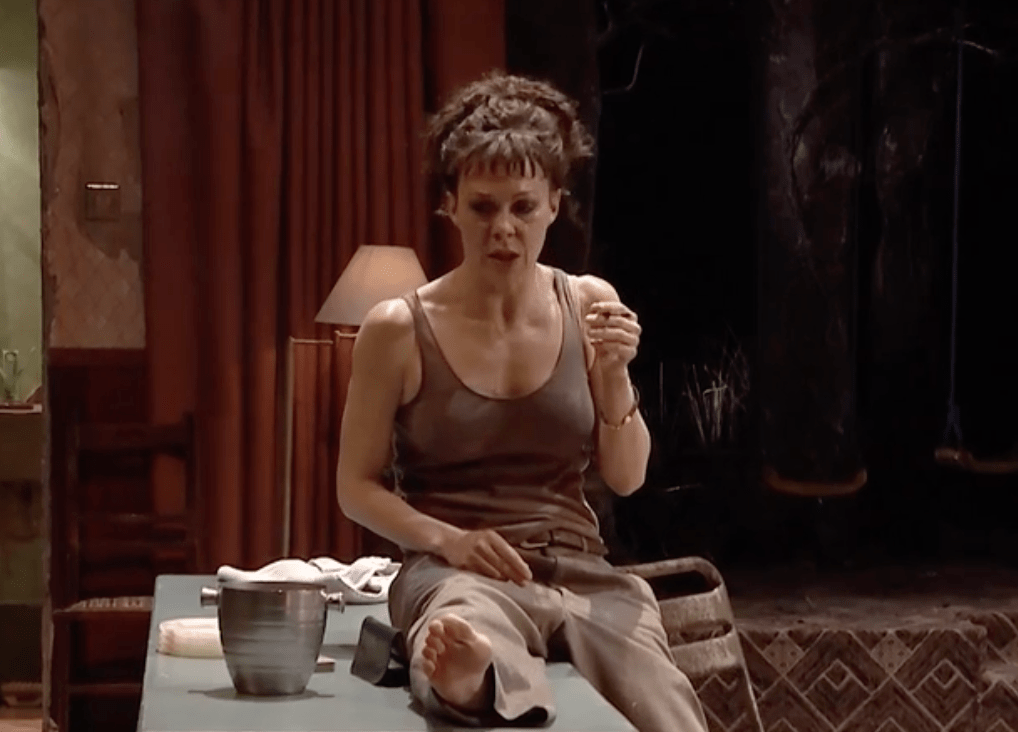
The opening scene is a clear example of how lighting plays a pivotal role in the play. In this scene, the audience sees warm lighting on the playing of Medea’s children with milk which casts a serene and domesticated glow across the stage. It is a sign of innocence and normalcy within the house, which in turn is utterly opposite to the real underlying reality of the household. When the nanny approaches the children during her soliloquy, it allows for changes in lighting to face her which highlights the showing of her sadness and anger towards Jason’s betrayal. This insignificant expression of light underlines that the nanny is a witness to the suffering of Medea and reflects the further tragic development of the deaths in later events. Yellow tones around the nanny-cum-confidante predict both anger and sadness which sets an ominous tone which is very important in the development of the play.
Lighting also plays with the contrasts of colors to correspond to various spheres of influence and events. For example, when the chorus appears on stage, the blue and pink mystical lighting bathing the chorus MAKES their presence more ethereal and casts them as otherworldly observers responding to Medea’s plight. The color palette greets the chorus and distances them from the reality of the home, placing them as in a separate realm. In the scenes where they would address Medea, the chorus is bathed in shadowy, almost ghostly light. This lighting symbolizes both their sympathetic yet cautious bystander attitude to her actions. This immediately situates the chorus within an ambiguous space, which underlines the chorus’s moral uncertainty in view of the unfolding tragedy.
Light itself is also used directly or indirectly in several key scenes to illustrate the turmoil of Medea as she battles her psyche. For example, as she starts fully to assume her role as an avenger to revenge and kill, the lighting is brought down inexorably to half-light, illuminating only half of her face while the other half remains in shadow. This half-lit presentation parallels Medea’s dual identity: the mother and the vengeful figure who is stepping into darkness. The effect of the director’s use of a frail, single light in this particular moment adds to her transformation; visually, it marks the shift from her life as a domesticated person to the darker path she has chosen. The shadows that encase her figure reflect moral ambiguity, capturing the tragic irony of how the pursuit for justice will translate into suffering.
In scenes with Jason, Ageus, and King Creon, lighting is more natural to give these interactions the touch of realism. Contrasting with the emotionally surcharged scenes of this play, the scenes with dialogues are bathed in a more neutral and natural light to convey the sense of unembellished reality. When Jason attempts to explain why he must abandon Medea, the lighting highlights his rational yet emotionally dispassionate delivery. It is in contrast to the emphatic lighting when there are solely scenes of Medea driving a wedge between her emotions and the disregard of others. The attention to detail of lighting helps to afford depth for the viewing of Medea’s emotions: anguish, seething anger—even when Jason can’t understand the pain of his wife.
The wedding scenes are the most striking. With its use of lighting that merges white, pink, and blue tones, the scene is transformed into a surreal and magical atmosphere. This scene of bright, ethereal light strikingly contrasts with the deeper tones that are associated with Medea’s presence and represents the new beginning that Jason seeks with the princess. With the delivery of Medea’s poisoned gifts, the celebrating bright lights gradually fade into a cold sterile blue light which signals the shift to death of the princess. This transition not only shows the tragedy of the future but also depicts visually how far the reach and power of Medea stretches over even a seemingly untouchable royal family. It also emphasizes the significance of blue lighting to symbolize death which contrasts with the warm lighting that symbolizes anger.
Light is taken one step further in the importance of the play in the final scenes of the production by using it as a symbol of Medea’s tragic victory and escapement. The stage darkens as Medea is forced to commit the final, gruesome act, and only a very dim, eerie light from behind outlines her figure. Her stage motions were bathed in red and yellow lights, which is an immediate visual reminder of her earlier consideration of fire, anger, and vengeance. By the time she reaches the children with a knife to kill them, the lighting has further dimmed, withdrawing her in isolation as she is committing this dreadful act. At this moment, the tableau is complete of her descent into moral ambiguity, the final transformation from mother in mourning to figure of wrath.
Light is used to illuminate the tragic accomplishment and the psychological release of Medea in the theatrical production’s end. Where the light is understandably very soft and almost serene for her release from this trauma and anger that have consumed her as she walks into the forest bathed in pale blue and white. The shift from the extreme, fiery colors of the earlier scenes to this cooler, almost heavenly light would suggest that she has transcended her suffering to an attained form of liberation. The light represents both the otherworldly release of her children’s souls and the ambiguous victory of Medea over her enemies.The set design also supports these interpretations of the lighting decision as well. The backdrop of the forest is dark and shadowy—a refuge, yet a dangerous place—and often plunges the children into dim light, a foreshadowing of their tragic death at the end. The dim light becomes a silent reminder of the children’s frailty amidst turmoil caused by Medea. In contrast, the living room is well-lit, indicating it as a place of action and domesticity. Whenever the characters needed to either enter or exit, just like Aegeus did, the lighting would also change because his retiring into the dark forest signifies his retreat from the main conflict of the plot.
During the play, lighting was also applied to become one of the visual languages in respect to Medea’s fits of fury and personal tragedy. From the golden innocence of children’s early scenes, to the cold detached blue of the wedding, to the last pale glow in the forest, each shift of lighting conveys changes in Medea’s emotional and psychological state. The subtle use of lighting by the director enhances the emotional depth in the production and offers a strong lens through which the audience can make sense of Medea’s transformation from a vindictive wife into a tragedy of revenge. These intentional choices of lighting allows the National Theatre’s production of Medea to drive an incredible visual narrative right into the tragic and making the lights integral to telling the story.




 Justina's Writing Corner
Leave a comment