
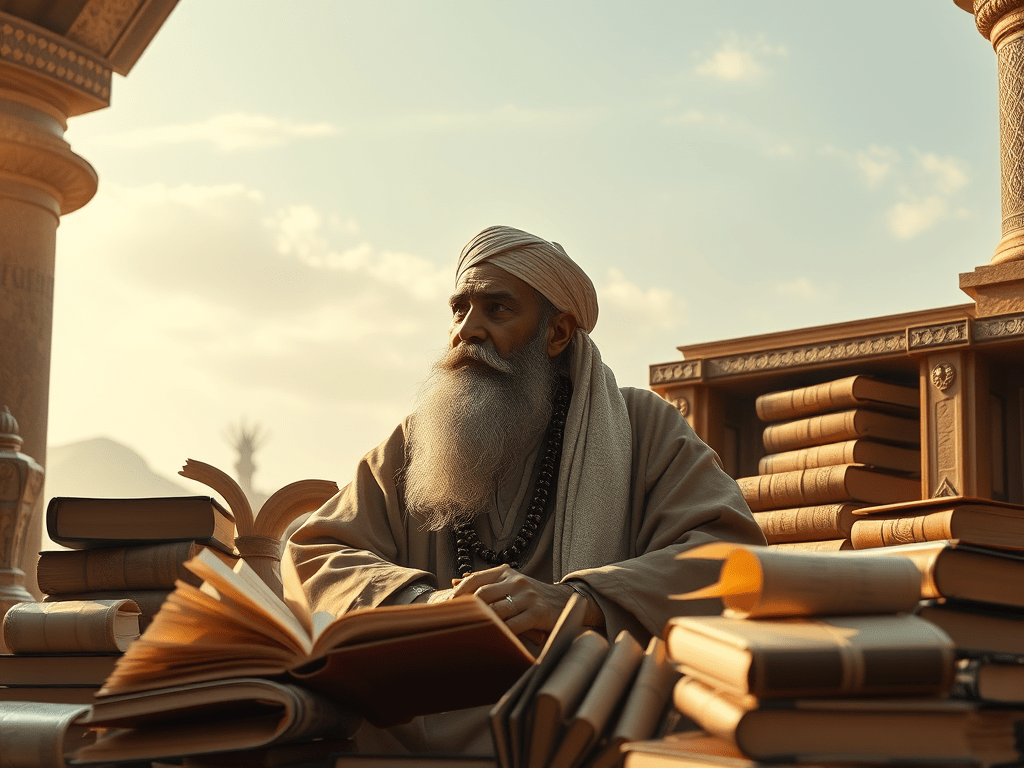
In The Attainment of Happiness, Al-Farabi explores the nature of happiness, the hierarchy of knowledge, and the relationship between philosophy, politics, and religion. He challenges conventional views on what constitutes a truly happy life. He argues that happiness is not merely a feeling but a state of intellectual and philosophical fulfillment. Al-Farabi is not found in ruling others but in the pursuit of knowledge that leads to the understanding of ultimate truths.
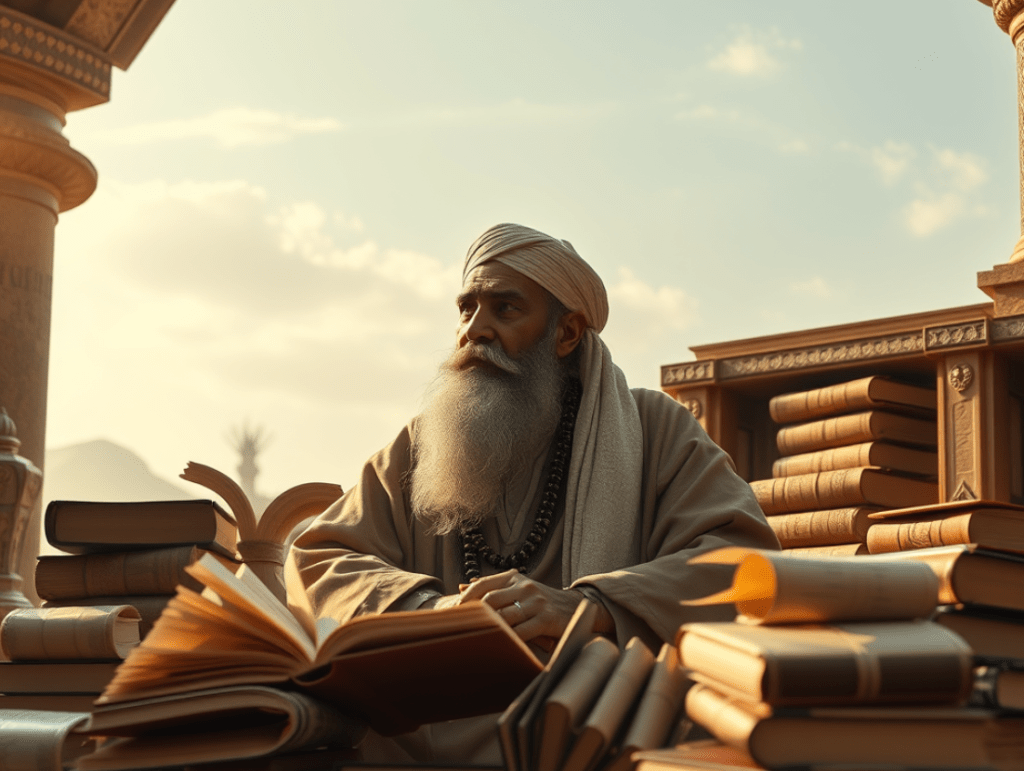
Is happiness simply a fleeting emotional state, or does it require something deeper and more enduring? Al-Farabi distinguishes between temporary feelings of happiness and a truly happy life, arguing that genuine happiness is not found in momentary pleasures but in the attainment of knowledge and wisdom. While one may feel happiness without leading a happy life, feelings alone are insufficient for true fulfillment. This raises the question: Can lies make us happy? If happiness is tied to truth and intellectual perfection, then false beliefs, no matter how comforting, cannot provide real happiness. Al-Farabi emphasizes that religions are diverse and changeable, while truth remains singular and unchanging. A life built on deception, even if it provides temporary contentment, is fundamentally unstable. True happiness, according to Al-Farabi, comes from understanding reality and not from illusions.
Al-Farabi’s principle of superiority states that the right to rule comes from superior knowledge. However, he makes a critical distinction between different types of knowledge: \n\nTheoretical knowledge, which concerns the nature of reality and leads to true happiness. \nPersuasive, imagistic, and customary knowledge, which is necessary for ruling others but is not the highest form of knowledge. This distinction challenges the idea that political rulers are necessarily the most superior individuals. While they may be skilled in governance, their knowledge is practical rather than absolute.
Al-Farabi argues that true superiority is not political but intellectual, raising the question: Is the supreme ruler simply a political leader, or does true authority come from knowledge itself? He further distinguishes between prophets and philosophers in their roles as rulers. Prophets receive divine revelation, which grants them authority over political life, but their knowledge is practical rather than philosophical. Philosophers, on the other hand, seek to understand reality itself, making them superior in terms of wisdom. Thus, while political rulers may be entitled to govern, their authority is ultimately subordinated to the knowledge possessed by philosophers.
If political rule is based on practical knowledge rather than theoretical wisdom, then is it truly the highest form of life? According to religious thought, God is the supreme ruler, governing through laws and political order. However, Al-Farabi challenges this assumption. He asks: Is there a way in which God rules that is higher than political governance? If God’s rule is not political, then political rule cannot be the highest form of life. For Al-Farabi, the best life is one of intellectual and philosophical pursuit, not governance. He argues that political rule is for the sake of philosophy, meaning that rulers exist to create a society in which the highest knowledge can be pursued. This suggests that those who rule others are not the most superior individuals—rather, those who possess knowledge of ultimate truths hold the highest position in the hierarchy of wisdom.
A critical aspect of Al-Farabi’s argument is his distinction between philosophy and religion. He asserts that religion is an imitation of philosophy, designed to make complex ideas comprehensible to the general public. While religion presents images of God and happiness, philosophy seeks to understand them as they truly are. Since religion depicts God as a political ruler acting by will, it provides an incomplete and potentially misleading image of divine truth. Likewise, religion offers simplified images of happiness, designed to guide ordinary people rather than provide true understanding.
If true happiness comes from knowing the nature of things, then religious images—while useful—do not lead to ultimate fulfillment. This raises the question: Can someone be truly happy without being complete? If human beings are capable of reaching certainty about the nature of reality, then failing to pursue this knowledge leaves them incomplete and unfulfilled. Al-Farabi implies that those who limit themselves to political or religious knowledge cannot achieve true happiness, as they lack the intellectual perfection that comes from philosophy.
Farabi’s philosophy presents a hierarchical view of knowledge, where practical wisdom serves theoretical wisdom. While political rule is necessary for organizing society, it is not the highest form of life. The perfect ruler must also be a philosopher, but the perfect philosopher does not need to be a ruler. Happiness is not merely a feeling of joy, nor is it found in political power. Instead, true happiness comes from achieving certainty about reality, which leads to intellectual and moral perfection. Those who limit themselves to ruling others, engaging in political affairs, or following religious images may experience temporary satisfaction, but they do not reach the supreme happiness that comes from understanding truth itself. Ultimately, the highest life is the life of the philosopher, not the politician. While governance is necessary for maintaining social order, its true purpose is to create conditions where individuals can seek and attain ultimate knowledge. By subordinating political rule to philosophy, Al-Farabi affirms that true superiority lies not in the ability to govern people, but in the ability to comprehend reality itself.




 Justina's Writing Corner
Leave a comment